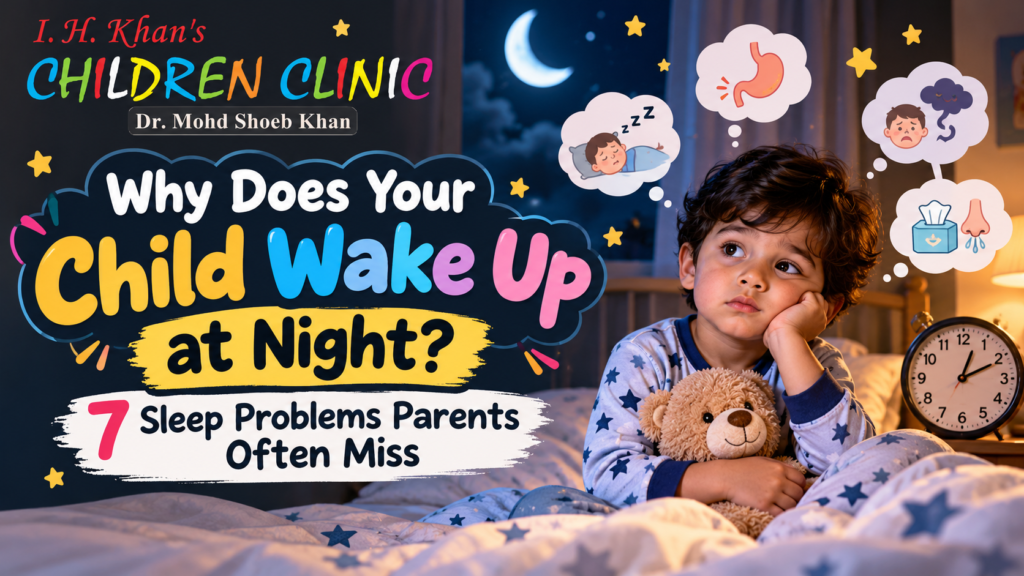
A child who wakes at 2 AM, crying, calling out or climbing into your bed, can leave the whole house tired by morning. Most parents hear the same advice from relatives: “he will grow out of it.” Sometimes that is true. Often there is a specific reason behind the waking, and finding it is the first step to better nights.
Night waking is common in children, but waking again and again for weeks usually has a cause worth finding. This guide explains what normal sleep looks like at each age, the seven sleep problems parents miss most often and the signs that mean it is time to see a pediatrician in Raipur. The advice follows standard paediatric guidance and is written for families here.
Is It Normal for a Child to Wake Up at Night?
Yes, brief waking is normal. Sleep moves in cycles, and a child comes close to waking at the end of each cycle. Most children glance around, turn over and fall asleep again within moments. A problem starts when the child cannot settle without help, wakes fully many times or stays awake for long stretches.
A child who wakes once or twice and settles quickly is usually sleeping normally. A child who wakes often, snores loudly or seems tired through the day needs a closer look.
How Much Sleep Does Your Child Need Each Night?
The American Academy of Sleep Medicine gives these total sleep ranges for every 24 hours, with naps counted for the younger groups:
- Infants, 4 to 12 months: 12 to 16 hours, including naps
- Toddlers, 1 to 2 years: 11 to 14 hours, including naps
- Preschoolers, 3 to 5 years: 10 to 13 hours, including naps
- School-age children, 6 to 12 years: 9 to 12 hours
Newborns sleep in short stretches around feeds and do not follow these ranges in the first weeks. A child who regularly sleeps well below the range for their age, or who sleeps enough hours but wakes through the night, may have one of the problems below.
What Are the 7 Sleep Problems That Wake Children at Night?
These seven causes come up again and again in children who wake at night. Several can overlap in the same child, so it helps to read all seven before deciding what fits. A snoring child may also be hungry, and a worried child may also have a blocked nose, which is why the cause is rarely obvious on the first night.
1. Snoring, Mouth Breathing and Blocked Airways
A child who snores every night, breathes through the mouth or sleeps with the neck stretched back may be struggling for air. Enlarged tonsils, enlarged adenoids and nasal allergies are common reasons. The airway narrows during sleep, the child wakes briefly to open it and the cycle repeats without the parent noticing. Restless sleep, sweating at night and bedwetting can go with it. In the daytime these children often look sleepy, cranky or unable to focus.
Repeated throat infections can leave the tonsils swollen, so a child with frequent sore throats and noisy sleep should be examined with both problems in mind. Parents can read more about tonsillitis treatment if throat problems keep returning.
Loud nightly snoring, pauses in breathing or gasping during sleep always deserve a medical check.
2. Nightmares and Night Terrors
Nightmares and night terrors look alike to a worried parent, but they are different. A nightmare is a bad dream that wakes the child, usually in the second half of the night. The child remembers it and wants comfort. A night terror happens earlier, often within a few hours of falling asleep. The child may sit up, scream and stare, yet stay asleep and remember nothing in the morning.
During a night terror, stay close, keep the room safe and avoid shaking or fully waking the child. The episode usually ends in a few minutes. Terrors are more likely when a child is overtired or follows an irregular schedule.
Comfort a child after a nightmare. Protect a child during a night terror and wait for it to pass.
3. A Bedtime Routine That Keeps Changing
Children who fall asleep only while being fed, rocked, held or watching a screen learn to link sleep with that one thing. When they wake between cycles, which everyone does, they cannot settle without it. Late dinners, weekend sleep-ins and screen time near bedtime all push the body clock later and make night waking more likely.
Put the child to bed drowsy but awake, keep bedtime within the same half hour on most nights and switch off screens an hour before sleep.
A steady routine teaches a child to fall back asleep alone.
4. Hunger and Nutrition Gaps
A child who eats little at dinner, skips meals during the day or has a diet low in iron can wake hungry or restless. Low iron has also been linked with restless legs symptoms in some children, which cause an urge to move the legs at night. Growth spurts raise hunger as well. If your child is a fussy eater, gains weight slowly or looks pale, a nutritional assessment can check growth and diet together.
Hunger at night and low iron are easy to miss, so check food and growth before assuming it is only a habit.
5. Allergies, Itching and Night-Time Discomfort
A blocked nose, cough, wheeze, itchy eczema, ear pain and acid reflux all feel worse when a child lies flat. Dust in bedding can trigger sneezing and cough. A warm room, a sweaty back or mosquito bites can wake a child on a hot Raipur night, even when nothing is medically wrong.
Wash bedding every week, keep the room cool and dark and check the child for rashes or scratch marks.
A child who wakes scratching, coughing or pulling at an ear is telling you where the problem is.
6. Night-Time Thirst and Frequent Urination
Waking once for water or to pass urine is common. Waking again and again for both, especially with tiredness, weight loss or bedwetting in a child who was dry before, needs a quick check. These can be early signs of high blood sugar. Type 1 diabetes in children is manageable with proper care, and early diagnosis matters. Parents who want to know more can read about pediatric diabetes. A simple blood sugar test can settle the question.
Extreme thirst, frequent urination and unexplained weight loss together call for a doctor visit within days, not weeks.
7. Age-Linked Wake-Ups and Stress
Newborns wake every few hours to feed, and this is healthy. Parents going through those first weeks can read about newborn. Babies around eight to ten months often develop separation anxiety, and toddlers test limits at bedtime. School-age children may lie awake over exams, a quarrel with friends, a move or a change at home.
Keep nights quiet and boring: low light, few words and the same calm response every time. For older children, a short talk about the day before lights go off helps worries come out before sleep.
Most age-linked waking passes with a steady response and time, but persistent fear, sadness or refusal to sleep needs medical advice.
When Should You See a Pediatrician About Night Waking?
See a pediatrician in Raipur if any of these apply:
- Snoring with pauses: loud snoring, gasping or breathing pauses during sleep
- Daytime effects: sleepiness, irritability, poor focus or falling grades
- Thirst and urination: extreme thirst, frequent urination or weight loss
- Long duration: night waking that continues for several weeks despite a steady routine
- Physical signs: fever, ear pain, cough with wheeze, rashes or poor weight gain
- Safety concerns: sleepwalking, or night terrors that injure the child or happen every night
Parents who search for the best paediatrician in Raipur or the best child specialist in Raipur usually want someone who listens to the whole sleep story, checks growth and looks for physical causes before suggesting any solution. A paediatrician in Raipur with neonatology training can do that for a baby, a toddler or a school-age child.
What Can Parents Do at Home to Improve a Child’s Sleep?
- Fix the timing: keep the same bedtime and wake time all week, within about 30 minutes
- Build a wind-down: a bath, a story and low light for 20 to 30 minutes before bed
- Cut screens early: switch off phones, tablets and TV an hour before sleep
- Set up the room: dark, quiet and comfortably cool, with bedding washed every week
- Watch evening food: a light dinner well before bed, and no tea, cola or chocolate late in the day
- Keep the day active: outdoor play and morning light help the body clock settle
- Respond the same way: brief, calm and boring at every waking
- Keep a sleep diary: note bedtime, wake-ups and symptoms for two weeks and bring it to the visit
Do not give sleep syrups, melatonin or any other medicine without a doctor’s advice.
How Does I.H. Khan’s Children Clinic Help With Sleep Problems?
I.H. Khan’s Children Clinic is a children clinic in Raipur led by Dr. Mohd Shoeb Khan. He holds an MBBS, an MD in Pediatrics and a Fellowship in Neonatology, and has more than 11 years of experience. Families often look for a child specialist doctor in Raipur who can look after a child from the newborn stage onwards, and the doctor’s profile is available on the clinic website.
A visit for night waking usually starts with questions about bedtime, feeding, snoring, daytime mood and any recent illness. The doctor then checks growth, throat, nose, chest and ears, explains the likely cause and describes the next step. If tests or a referral are needed, the family hears the reason before anything is done.
Frequently Asked Questions About Child Sleep and Night Waking
Is it normal for a child to wake up at night?
Yes. Brief waking between sleep cycles is normal at every age. It becomes a concern when the child wakes many times, cannot settle without help or looks tired during the day.
Why does my child wake up screaming at night?
Nightmares and night terrors are the usual reasons. A child wakes from a nightmare and remembers it. A child in a night terror stays asleep and forgets it by morning. Fever, ear pain and an itchy rash can also cause screaming, so check for those first.
How much sleep does a 5-year-old need?
The American Academy of Sleep Medicine recommends 10 to 13 hours in every 24 hours for children aged 3 to 5 years, with naps included.
Is snoring in children serious?
Occasional snoring during a cold is common. Snoring on most nights, especially with gasping or pauses in breathing, needs a check by a pediatrician in Raipur because enlarged tonsils or adenoids are common causes.
Which doctor should I see for my child’s sleep problems?
A pediatrician is the first doctor to see. A child specialist in Raipur will ask about the sleep routine, examine the child for physical causes such as blocked airways or infection and suggest further tests or a referral only when needed.
Can I give my child melatonin or a sleep syrup?
No, not without medical advice. The cause of the night waking needs to be found first, and many causes, such as snoring, hunger or an allergy, will not improve with a sleep medicine.
Book a Consultation at I.H. Khan’s Children Clinic, Raipur
If your child’s nights have been broken for weeks, or any warning sign above sounds familiar, call the clinic and book a visit. Bring your sleep diary if you have one.
- Clinic:I.H. Khan’s Children Clinic
- Doctor: Dr. Mohd Shoeb Khan, MBBS, MD Pediatrics, Fellowship Neonatology
- Address: C11, Avanti Vihar Road, Near Hanuman Mandir ATM, Sector 1, Shankar Nagar, Raipur, Chhattisgarh 492001
- Phone: 9584007868
- Hours: Monday to Sunday, 10:00 AM to 1:00 PM and 5:00 PM to 9:00 PM
This article gives general information and does not replace medical advice. Every child is different. Consult a qualified doctor about your child’s sleep, symptoms or medicines.

At I.H. Khan's Children Clinic, we are dedicated to providing exceptional pediatric care for children of all ages. Led by Dr. Mohd Shoeb Khan, a highly experienced Pediatrician and Neonatologist, our clinic focuses on offering personalized healthcare services to ensure the well-being of every child. We provide a wide range of services, including newborn care, growth and development assessments, vaccinations, and management of pediatric infections. Equipped with modern medical facilities and advanced technologies, we ensure that each child receives the best possible care in a compassionate and comfortable environment. At I.H. Khan's Children Clinic, we prioritize the health, safety, and happiness of your child, making their care our top priority.