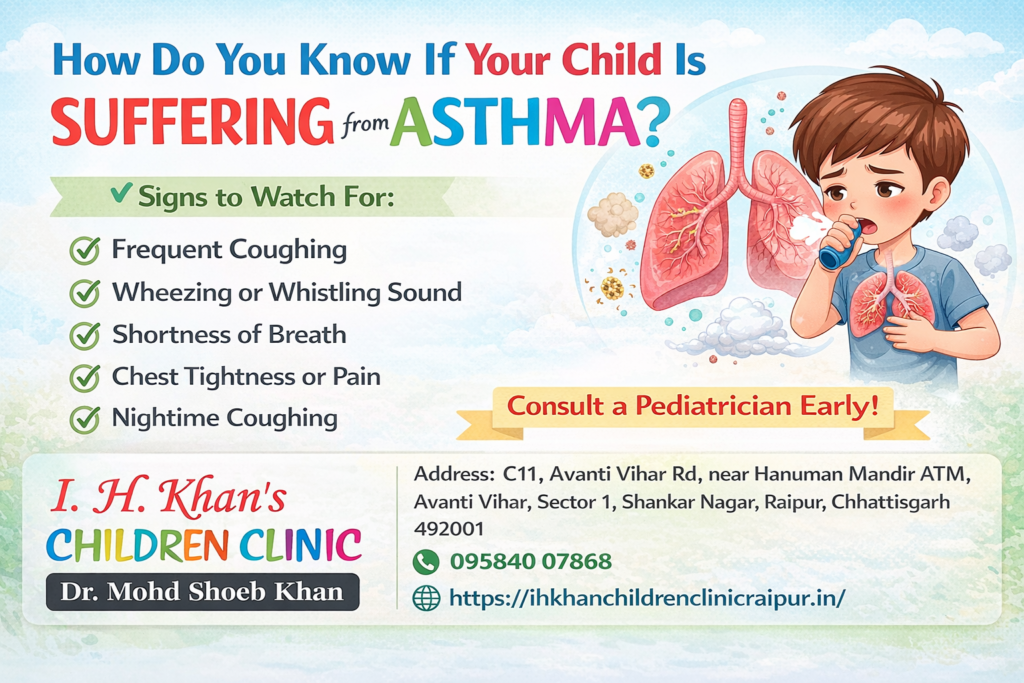
As a Pediatrician in Raipur, one of the most common conditions I diagnose in children is asthma. Asthma is a chronic condition that affects the lungs and airways, making it difficult for your child to breathe. If left untreated, asthma can interfere with their daily life and cause more serious complications. In this blog, we will explore the signs, symptoms, and how you can tell if your child may be suffering from asthma. Asthma is often seen in children as they grow and develop, but it can also occur at any age. Many parents are unsure about the difference between a common cold, allergies, or something more serious like asthma. Understanding the warning signs is essential in providing your child with the proper care they need.
A fever is a body temperature higher than normal (around 98.6°F or 37°C). It’s a common symptom in children and usually indicates that the body is fighting an infection, such as a cold, flu or other viral or bacterial infection. Fever is often a sign that the body’s immune system is doing its job by responding to invaders like bacteria and viruses. Fever itself is not always harmful, but they can cause discomfort. The key is to determine the cause of the fever and how your child is handling it.
What Is a Fever and Why Does It Happen?
A fever is a body temperature higher than normal (around 98.6°F or 37°C). It’s a common symptom in children and usually indicates that the body is fighting an infection, such as a cold, flu, or other viral or bacterial infection. Fever is often a sign that the body’s immune system is doing its job by responding to invaders like bacteria and viruses. Fevers themselves are not always harmful, but they can cause discomfort. The key is to determine the cause of the fever and how your child is handling it.
What Is a Normal Temperature?
A normal body temperature for a child is typically around 98.6°F (37°C). However- it can vary slightly depending on the time of day and whether the child is active or resting. Fevers are generally defined as a body temperature above 100.4°F (38°C). It’s essential to know what your child’s baseline temperature is to spot any changes quickly.
When Should You Worry About Your Child’s Fever?
While a mild fever is usually not a cause for concern, there are certain situations where you should contact a Pediatrician in Raipur for advice. You should seek medical help if your child’s fever lasts more than two to three days, or if it exceeds 104°F (40°C). These temperatures can cause discomfort and may indicate a more serious infection that needs medical attention. If your child is experiencing difficulty breathing, persistent vomiting or diarrhea, or a severe headache along with the fever, it’s essential to consult with a pediatrician immediately. Additionally, if your child is very young (under three months) and has a fever, treat it as an emergency and consult a doctor right away.
How to Treat a Fever at Home
For most mild fevers, home treatment can help your child feel more comfortable while their body fights the infection. Here are some ways to manage a fever at home:
- Hydration: Make sure your child drinks plenty of fluids, such as water, clear soups or electrolyte solutions. This helps prevent dehydration and keeps the body cool.
- Rest: Rest is essential for recovery. Encourage your child to sleep and take it easy during the day.
- Appropriate Clothing: Dress your child in light clothing and avoid bundling them up in too many blankets, as this can trap heat. A lukewarm bath can help lower the fever and soothe them.
- Medication: Over the counter medications such as acetaminophen (Tylenol) or ibuprofen (Advil) can help reduce fever and ease discomfort. Be sure to follow the dosage instructions based on your child’s age and weight and consult with your pediatrician before giving any medication.
When to Seek Immediate Medical Help
Even with proper care, some situations require immediate medical attention. Here’s when to seek urgent help-
- Your child’s fever is very high (above 104°F or 40°C).
- They are having trouble breathing.
- They are lethargic, confused or unresponsive.
- They have a seizure, or if you notice signs of a febrile seizure (twitching, shaking, or jerking).
- They are a baby younger than 3 months with a fever.
If any of these signs are present, contact your pediatrician right away or go to the emergency room.
Final Thoughts
Fever in children can be a common and manageable issue, but it’s important to know when to seek help. By being proactive, keeping an eye on the fever and monitoring other symptoms, you can help ensure that your child stays healthy and safe. Don’t hesitate to consult your pediatrician if you’re unsure about how to handle a fever or if your child shows concerning symptoms.
At I.H.KHAN’S Clinic Raipur, we are here to help you navigate your child’s health concerns and provide expert guidance on how to treat common illnesses, including fevers. Regular check-ups, timely vaccinations, and staying informed are key to keeping your child healthy.
If your child has a fever or you’re unsure about their symptoms, don’t hesitate to contact us. We are always here to help guide you and your child to better health.

At I.H. Khan's Children Clinic, we are dedicated to providing exceptional pediatric care for children of all ages. Led by Dr. Mohd Shoeb Khan, a highly experienced Pediatrician and Neonatologist, our clinic focuses on offering personalized healthcare services to ensure the well-being of every child. We provide a wide range of services, including newborn care, growth and development assessments, vaccinations, and management of pediatric infections. Equipped with modern medical facilities and advanced technologies, we ensure that each child receives the best possible care in a compassionate and comfortable environment. At I.H. Khan's Children Clinic, we prioritize the health, safety, and happiness of your child, making their care our top priority.